
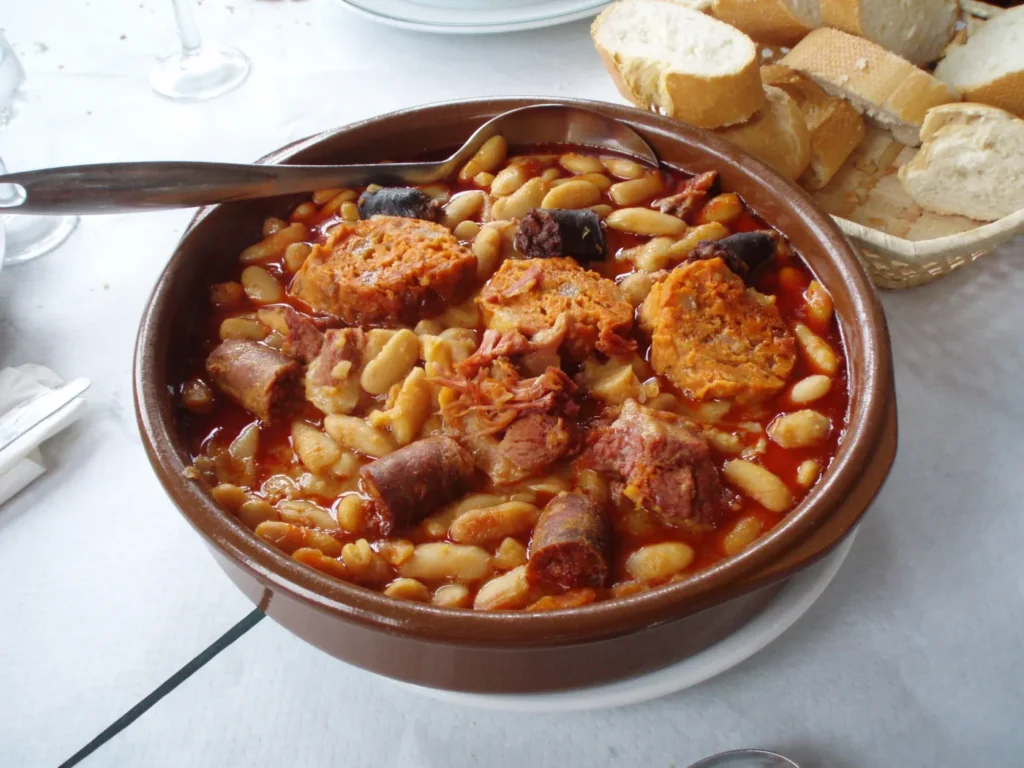
After a full day walking in the Picos de Europa, few things hit the spot like a good plate of fabada. It is, without question, the most international dish in Asturian cooking, and also one of the simplest in appearance: fabes slow-cooked with compango.
The fabes: the ingredient that decides everything
Fabada begins and ends with the bean. The Asturian faba is a variety of white bean, large, flat and elongated, with a very fine skin and a buttery texture that sets it apart from any other pulse. It is what makes fabada fabada and not a bean stew.
That fineness of skin is also its fragility: if the boil is fierce, the fabes break up and the dish turns into a purée. Which is why the whole technique revolves around keeping the heat down.
They are grown in Asturias on small plots, often alongside maize, which acts as a support. Production covered by the geographical indication is sold as Faba Asturiana, and it costs noticeably more than an ordinary bean: it is a dry-farmed crop, laborious to harvest and low-yielding.
The compango
The compango is the set of cured meats that gives fabada its deep flavour and thick broth. It consists of chorizo, morcilla and either lacón (cured pork shoulder) or belly fat, all of them cured and, in the Asturian case, generally smoked.
That smoking is decisive. Traditionally the meats were cured hanging over the llar, the wood-fired hearth of the kitchen, absorbing smoke for weeks. It is what gives that characteristic base note distinguishing an Asturian fabada from a bean stew with chorizo in it.
Asturian morcilla, moreover, does not contain rice or onion in the proportions used in other regions: it is essentially smoked blood and fat, and it colours the broth as it cooks.
How it is cooked
The recipe has few ingredients and a great deal of patience. The fabes are soaked in cold water the night before. The compango, if heavily cured, is also desalted separately.
The next day they are cooked together, starting from cold water and covering the beans without excess. When it comes to the boil, the foam is skimmed off and the heat is turned right down: from then on the stew should barely tremble for two or three hours. If it gets lively and starts to bubble, it is "startled" with a splash of cold water, a gesture that breaks the boil and stops the fabes from falling apart.
It is stirred little, and never with a spoon: the pot is rocked back and forth so the beans stay whole. Saffron is usual, and onion and garlic appear or not depending on the household. What almost nobody disputes is that fabada is better the next day: rested, the broth binds and the flavour settles.
A dish built for hard work
Although it is eaten all over Spain today and at any time of year, fabada was born as winter food and food for hard labour. It was made for the busiest days in the fields or the mountains, when the body needed something substantial to carry it through.
That is why it fits so well with an active holiday in Cabrales: after the Cares Route or the climb to Bulnes, a plate of fabada is the perfect reward. With one practical warning: it is a serious dish. If an afternoon of driving or walking awaits you, better save it for dinner.
How it is served, and with what
It is served piping hot, with the compango usually cut up on a separate plate so each person helps themselves, and in a deep bowl. It comes with bread and, almost always, with cider or a simple red wine, nothing grand: the stew is the star.
For dessert, tradition calls for arroz con leche requemado, rice pudding served in Asturias with a crust of caramelised sugar on top.
One detail for ordering wisely: in many restaurants in the area fabada is a set-menu first course, and the portions are generous. If there are two of you and you also want to try a cachopo, the sensible thing is to share.
Where to try it
Home-made fabada, cooked slowly for hours, remains a point of pride in every household and every restaurant kitchen in the district. Ask whether it is made in house and whether the fabes are Asturian: those are the two questions that separate a good fabada from a merely correct one.
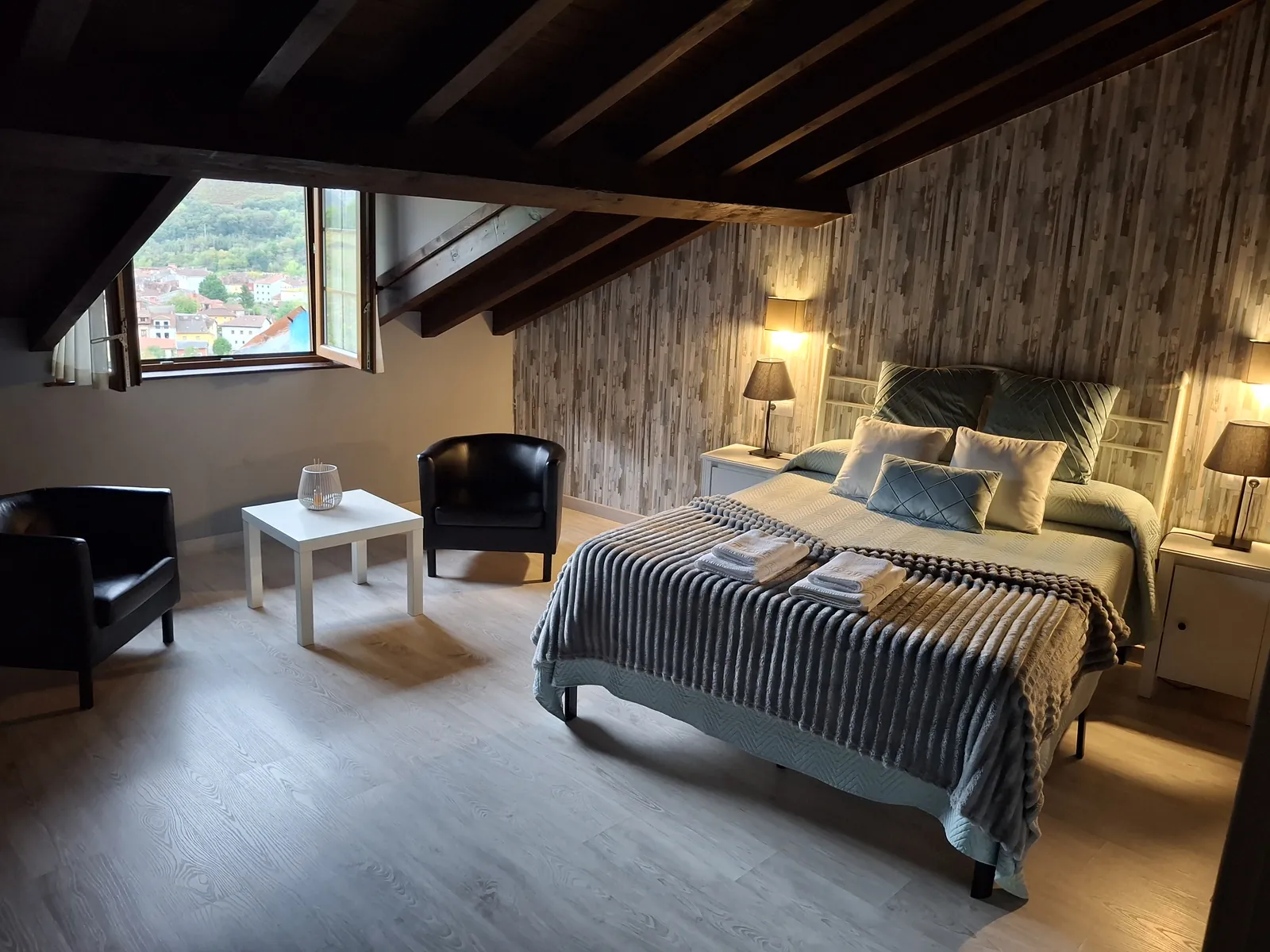
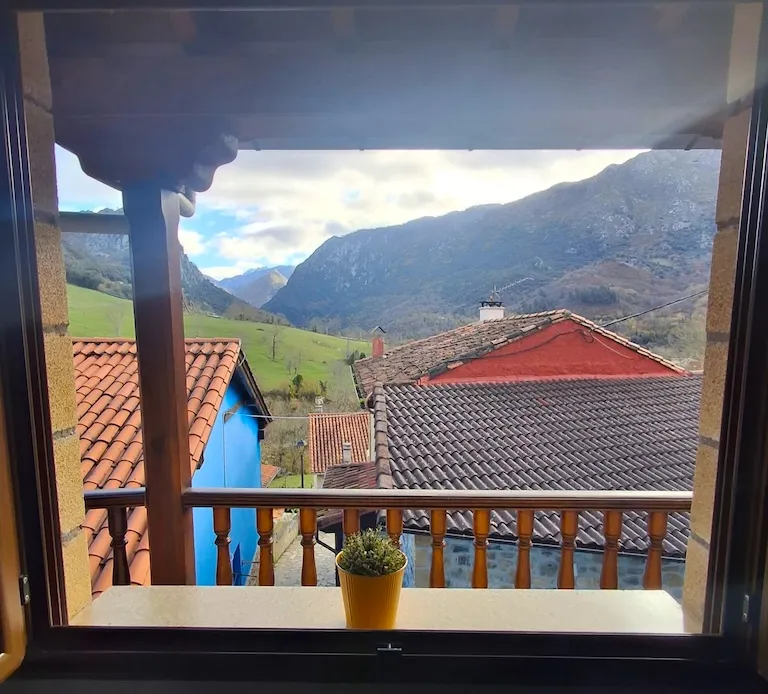
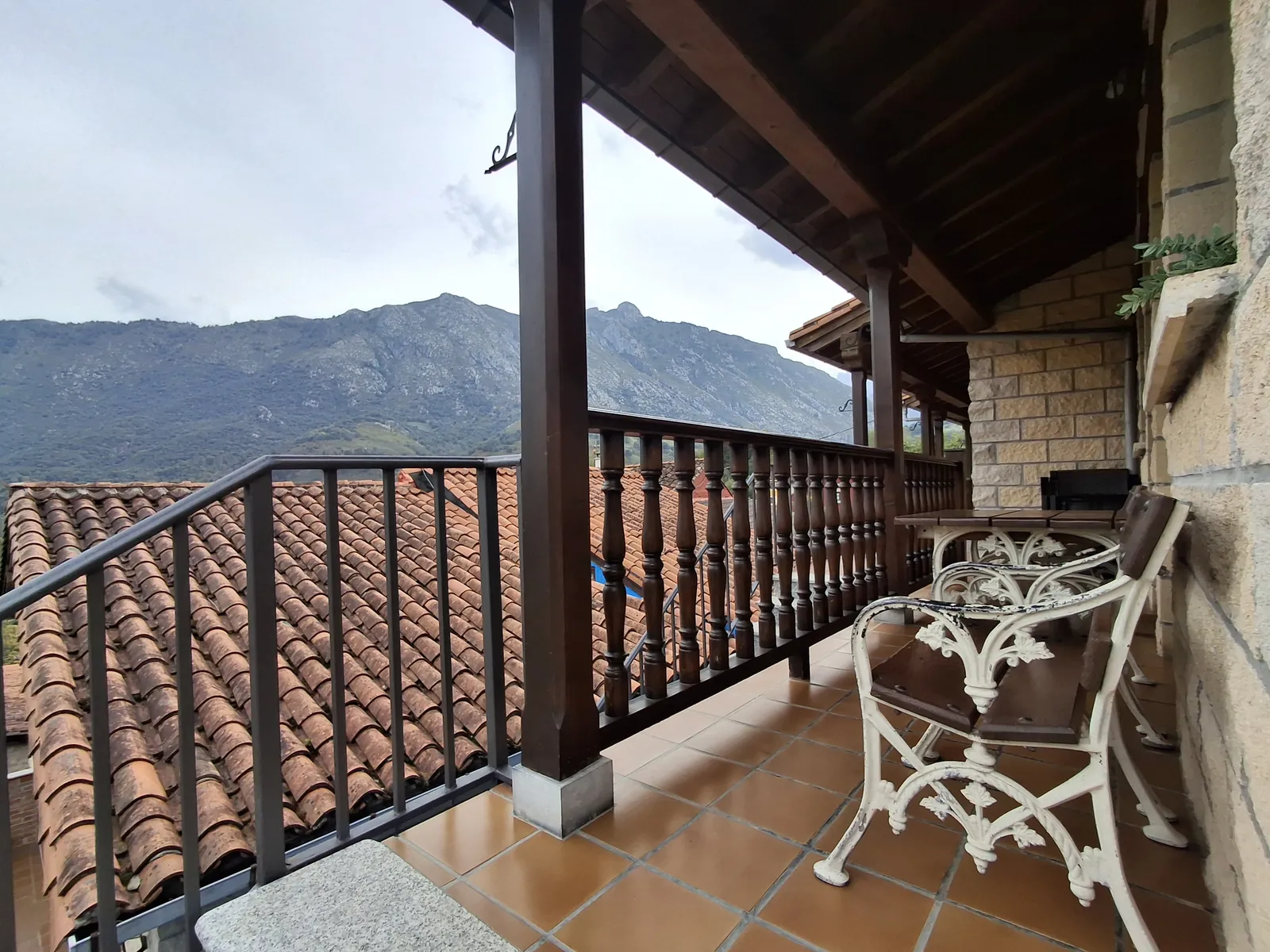
Staying at El Ardinal, in Arenas de Cabrales, puts the village centre, with several places to try it, a 9-minute walk away. And since the apartments have a full kitchen, there is always the option of buying fabes and compango locally and making it in the apartment.
To round off the Asturian table, do not miss Cabrales cheese or Cantabrian fish.
Sources: fabada (Turismo Asturias).