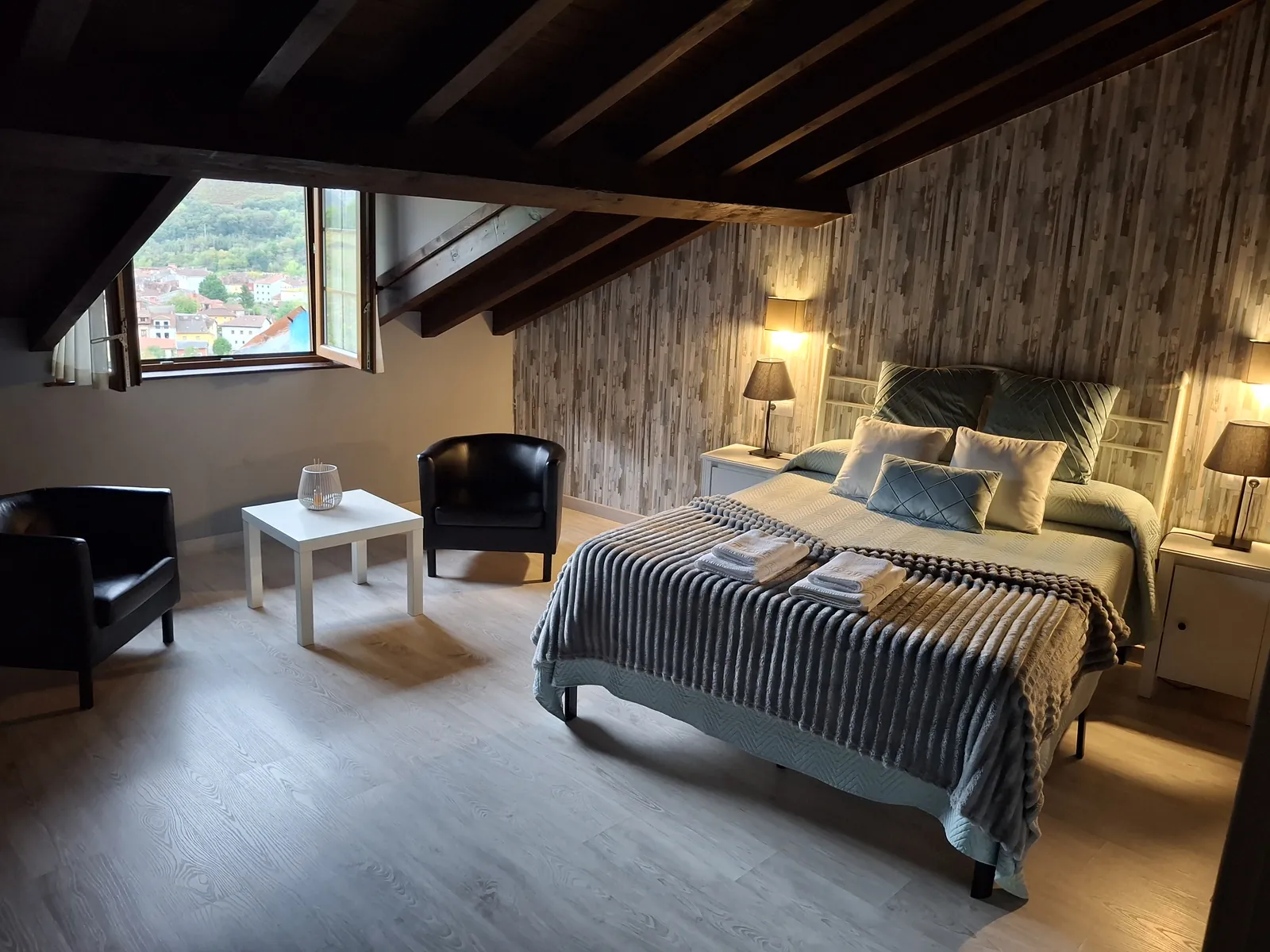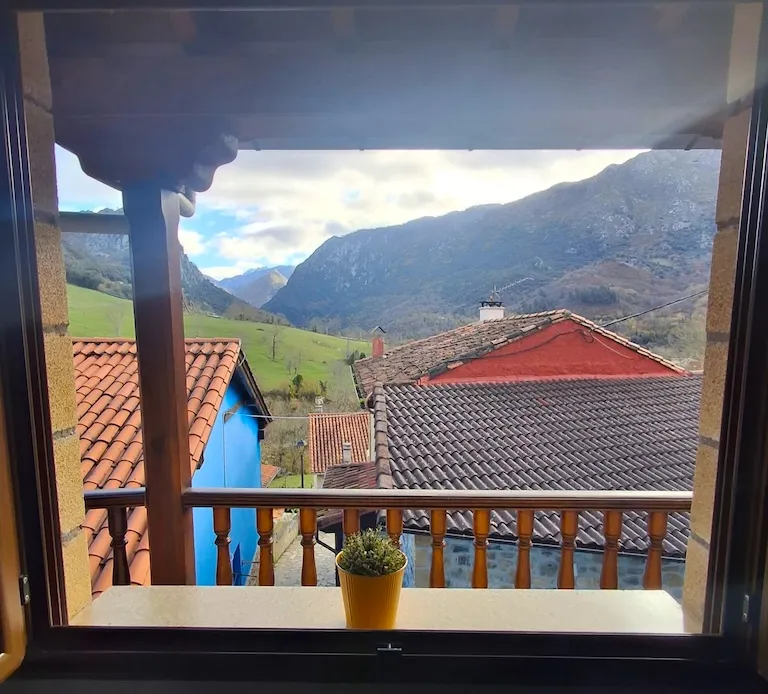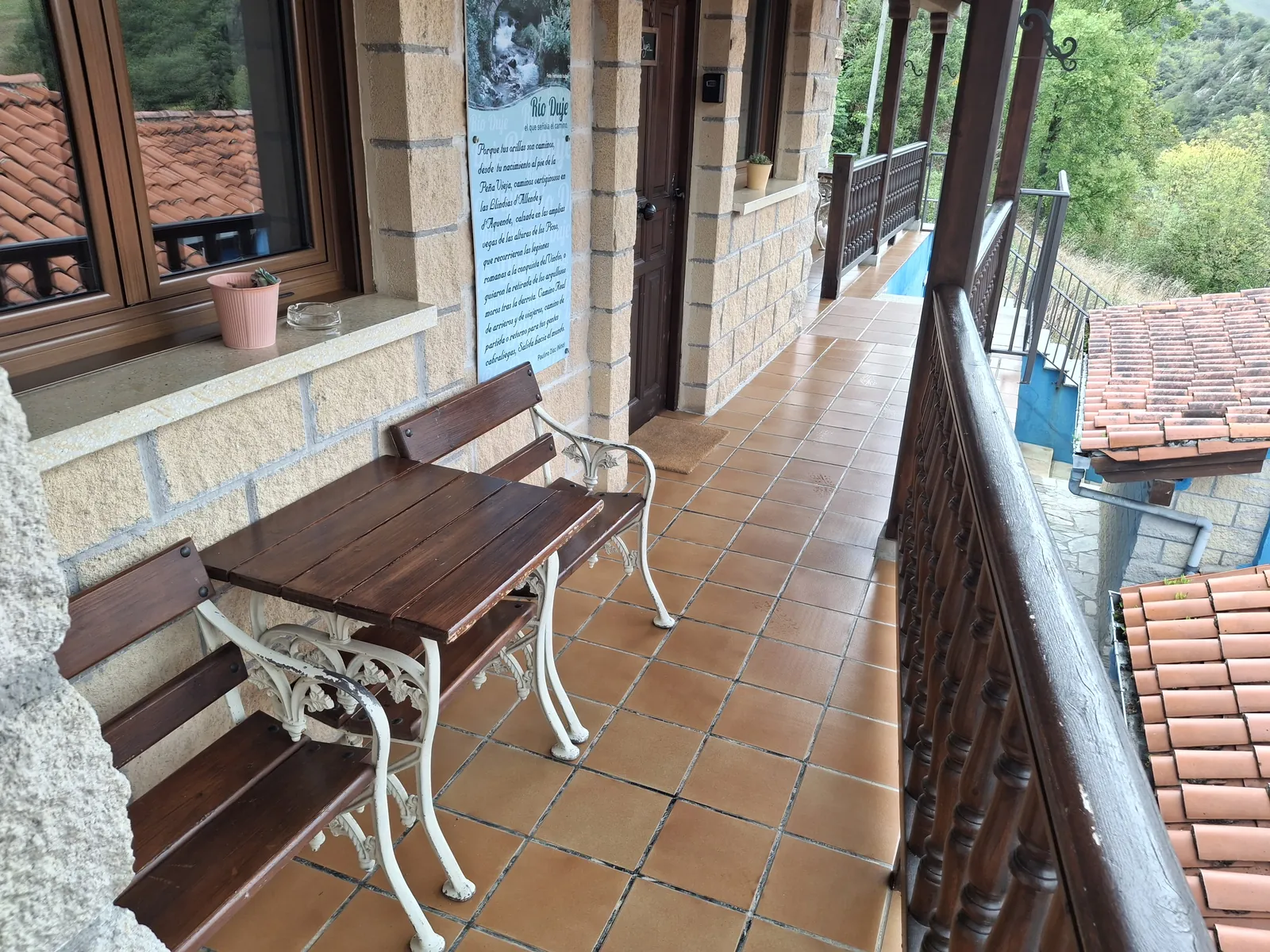
If one product sums up Cabrales, it is its cheese. Cabrales is a blue cheese with Protected Designation of Origin, made for centuries from raw milk in the municipality of Cabrales and three villages in Peñamellera Alta, at the foot of the Picos de Europa National Park, and matured for months in natural limestone caves.
A cheese born of the landscape
Cabrales makes no sense without the mountains around it. For centuries, farming in these valleys was a subsistence economy: cows, sheep and goats grazing the high pastures in summer and coming down to the valley in winter. Leftover milk was turned into cheese, and to keep it people used what they had: the natural caves that the limestone of the Picos has been hollowing out from within.
That practical gesture — storing the cheese where it kept best — is exactly what defines the product today. Nothing is added to make it blue: it turns blue because of where it matures.
How it is made
It starts with raw cow's milk, or a blend with sheep and goat depending on the time of year and the farm. The milk being raw, unpasteurised, is one of the keys to the flavour: it keeps the flora of the pasture and of each herd, which is why two cheeses from neighbouring producers never taste quite the same.
The milk is curdled at a gentle temperature, the curd is cut and the whey drained. The wheels are moulded, salted and left for a few days in a ventilated room before the decisive step: the cave.
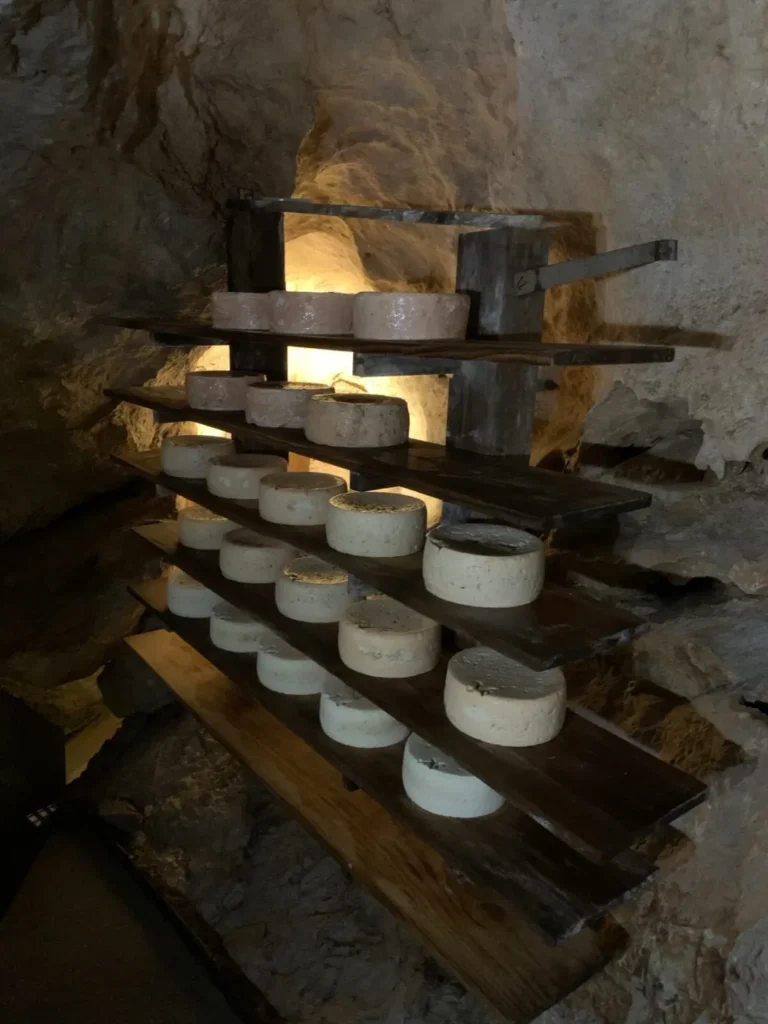
There, at almost constant temperature and humidity all year round, the cheeses mature for months. Air currents through the limestone and the Penicillium moulds naturally present in the cave colonise the paste. The wheels are turned and brushed regularly, and little by little the blue-green veins appear that run through the inside.
That slow process is what gives it an intense, sharp flavour with a hint of bitterness, very different from creamier, milder blues. Cabrales is not a shy cheese.
What the Designation of Origin protects
The DOP does not just protect a recipe: it protects a territory. Only cheese made and matured within the delimited area, with milk from the district itself and cured in a natural cave, may be called Cabrales. Every certified wheel carries its own identification, and that is the detail worth looking for when buying.
It matters, because there are blue cheeses on the market that imitate the style without meeting either the origin or the cave maturing. They look alike; they do not taste alike.
How to recognise the real thing when buying
Certified Cabrales is wrapped today in green aluminium foil with the numbered label of the Designation of Origin. If you cannot see that label, it is not Cabrales: it may be an excellent blue cheese, but from somewhere else.
The traditional image of the cheese wrapped in sycamore leaves belongs to a time before current food-safety rules, and today you will only see it in displays and fairs. Leaves do not make a cheese more authentic; the label does.
Buying it in the district itself has an added advantage: you can ask which cave it matured in and for how long — two things that change the result considerably and that you will rarely learn from a supermarket shelf.
How to try it without getting it wrong
Cabrales is a powerful cheese, and how you serve it changes the experience a great deal. Take it out of the fridge at least half an hour beforehand: cold, the fat is hard and the aroma stays locked in. At room temperature it opens up and gains nuance.
To go with it, the local pairing is hard to beat: spelt bread, a traditional Asturian grain with a dense crumb that stands up to the cheese, and natural cider, whose acidity cuts the fat and cleans the palate between bites. Sweet wines also work, playing off the salty edge.
If it is your first time, start near the rind, which is a little milder, and work towards the centre. And if the cheese is too strong on its own, try melting it: a Cabrales sauce over meat, or a cachopo filled with it, softens the blow without losing the character.
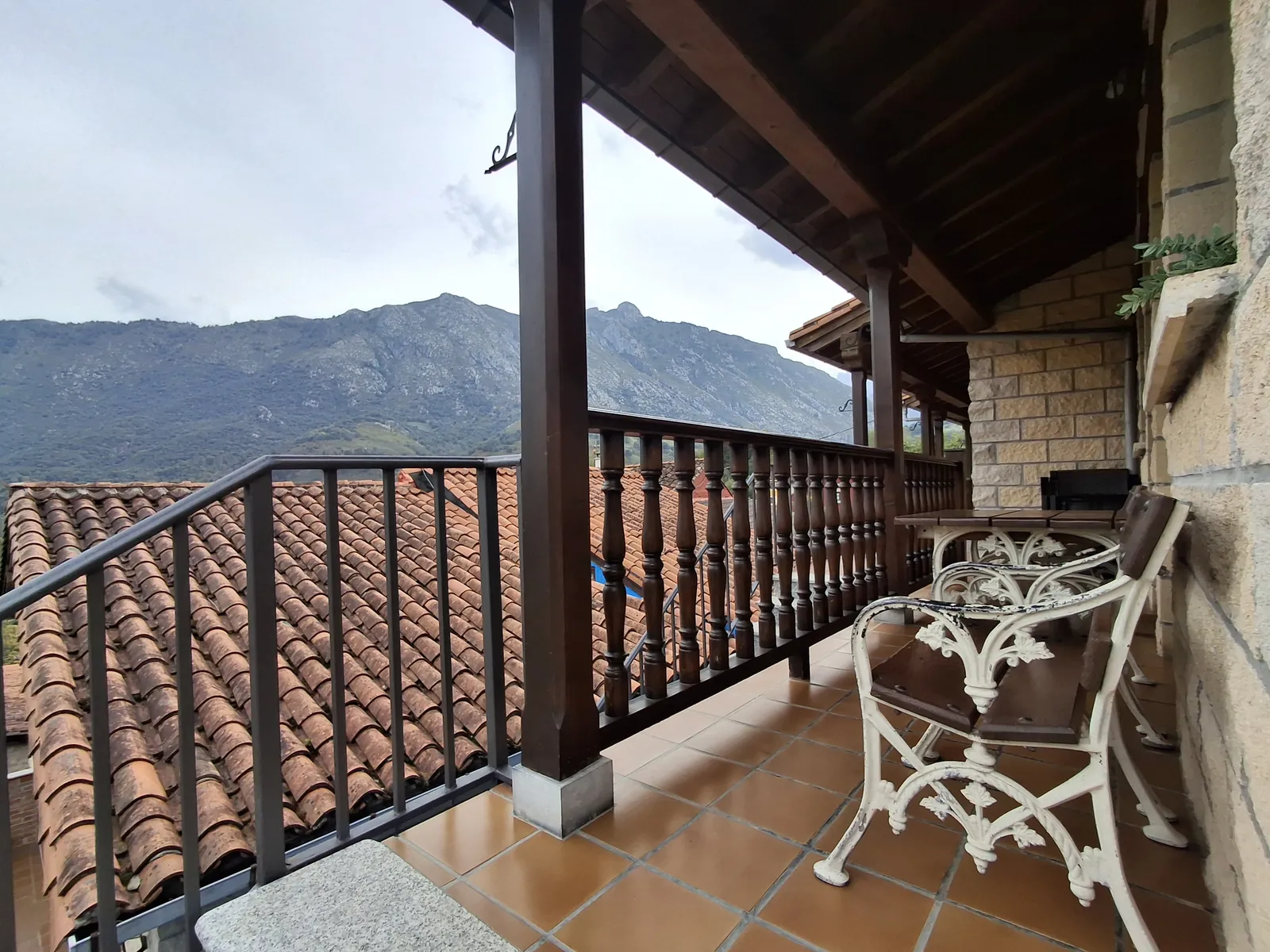
Buying a wedge at the dairy and eating it at home is, frankly, one of the best plans in the valley. If you are staying somewhere with a full kitchen like the Duje apartment, dinner sorts itself out: bread, cheese, cider and a gallery with a view, which needs nothing more.
Visiting the Cabrales Cheese Cave (Cueva Exposición)
Cabrales is far easier to understand after stepping inside a maturing cave. The change in temperature as you cross the threshold, the humidity and the smell explain the product better than any text.
In Arenas de Cabrales, a few minutes from the apartments, the Cueva Exposición del queso de Cabrales runs guided visits inside a real cave, with an audiovisual and a tasting included. It is managed by the Fundación Cabrales, and it is the most direct way to see the whole process without depending on whether a particular dairy happens to be open that day.
Worth knowing before you go:
- The guided visit lasts about 45 minutes and includes an audiovisual and a tasting.
- Groups are small, so it is best to book by phone (+34 985 84 67 02) rather than just turning up, especially in summer and on public holidays.
- It opens every day of the year except a handful of dates around Christmas, mornings and afternoons.
- Current opening times and prices are on their official website: they change with the season, so it is worth checking on the day.
Several dairies in the district also open their doors and let you taste cheese straight from their own cave. And every August the village holds the Cabrales Cheese Contest, with the auction of the season's best wheel as the highlight of the calendar.
If you stay at El Ardinal you have the cave and several dairies a very short distance away, and if you message us on WhatsApp we can tell you what is open during your stay.
The cheese's big day
If you want to see it in its element, on the last Sunday of August Arenas de Cabrales holds its Cheese Contest: the competition that picks the best wheel of the season, a market with the district's dairies selling directly, and an auction that has been breaking its own record for years — in 2026 the winning cheese fetched 37,500 euros. It is the day the whole valley organises itself around this cheese, and we cover it in full in our article on the Cabrales Cheese Contest.
And to keep eating
Cabrales is only the beginning: discover Asturian fabada, the cachopo and Cantabrian fish too on our food page.