
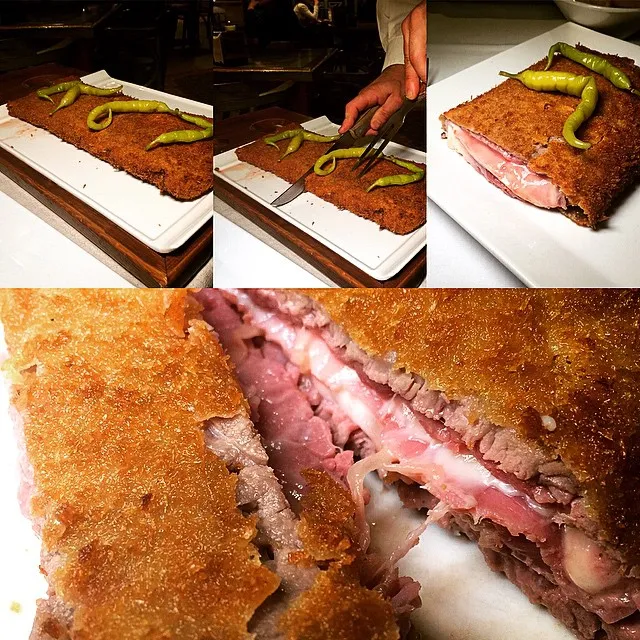
If you are looking for a dish that sums up the generosity of Asturian cooking, it is cachopo. Two large veal steaks filled with ham and cheese, breaded and fried, served in a portion meant for sharing — though plenty of people finish one on their own.
What exactly a cachopo is
The definition is simple and the execution has more to it than it looks. You take two large, thin veal steaks, place the filling between them, seal the edges well so nothing escapes during frying, coat them in flour and egg, breadcrumb them and fry them in plenty of oil until they are golden outside and the cheese has melted inside.
The difficulty lies in the balance: the meat has to stay juicy without the coating burning, and the cheese has to melt without leaking out. That is why the thickness of the steak and the temperature of the oil make the difference between a good cachopo and a merely acceptable one.
The name comes from the Asturian cachopu, meaning the hollow trunk of a tree. The image fits: a casing that keeps something inside.
From cider-house plate to star dish
Cachopo is not an old recipe-book dish but a relatively modern creation that spread through the twentieth century and has boomed in recent decades. Its exact origin is disputed, and some link it to other stuffed, breaded meats in European cooking, from cordon bleu to milanesa.
What is unmistakably Asturian is what it has become: a dish of identity, with annual competitions crowning the region's best and restaurants competing over the most original or the largest version. Comparing cachopos from one place to the next has become almost a sport for anyone visiting Asturias.
The filling: from the classic to the local variant
The classic cachopo carries Serrano ham and a mild cheese that melts well. From there, every kitchen has its own version.
The variant of most interest around here is the one filled with Cabrales cheese: the blue brings an intensity that changes the dish completely, and works surprisingly well with the meat. If raw Cabrales feels too powerful to you, this is an excellent way to discover it, because the heat softens it without stripping away its character.
You will also find cachopos with piquillo peppers, with mushrooms — very good in autumn — with cecina, with Iberian ham or even with seafood in coastal areas. And there is a vegetarian version, the aubergine or courgette cachopo, increasingly common on menus.
How to order it without getting it wrong
Here are the three tips that head off the typical visitor's mistake.
One between two, at least. The portions are genuinely large. In many places a cachopo comfortably feeds two people, and if you have also ordered a starter it can stretch to three. Ask about the size before ordering one each.
Careful with the full menu. If the cachopo comes as a main after a fabada, the combination is too much. Pick one of the two and leave the other for another meal.
Ask about the meat. The best are made with Asturian veal, and many restaurants say so on the menu. It is a good sign that the dish is taken seriously.
It is almost always served with chips and peppers, and drunk with cider or beer. And it is worth eating it freshly made: it loses a lot if it waits, because the coating goes soft.
The reward after the mountain
Like fabada, cachopo fits particularly well at the end of an active day. After the Cares Route or a day of hiking in the Picos, sitting down to a cachopo straight out of the pan has something of a celebration about it.
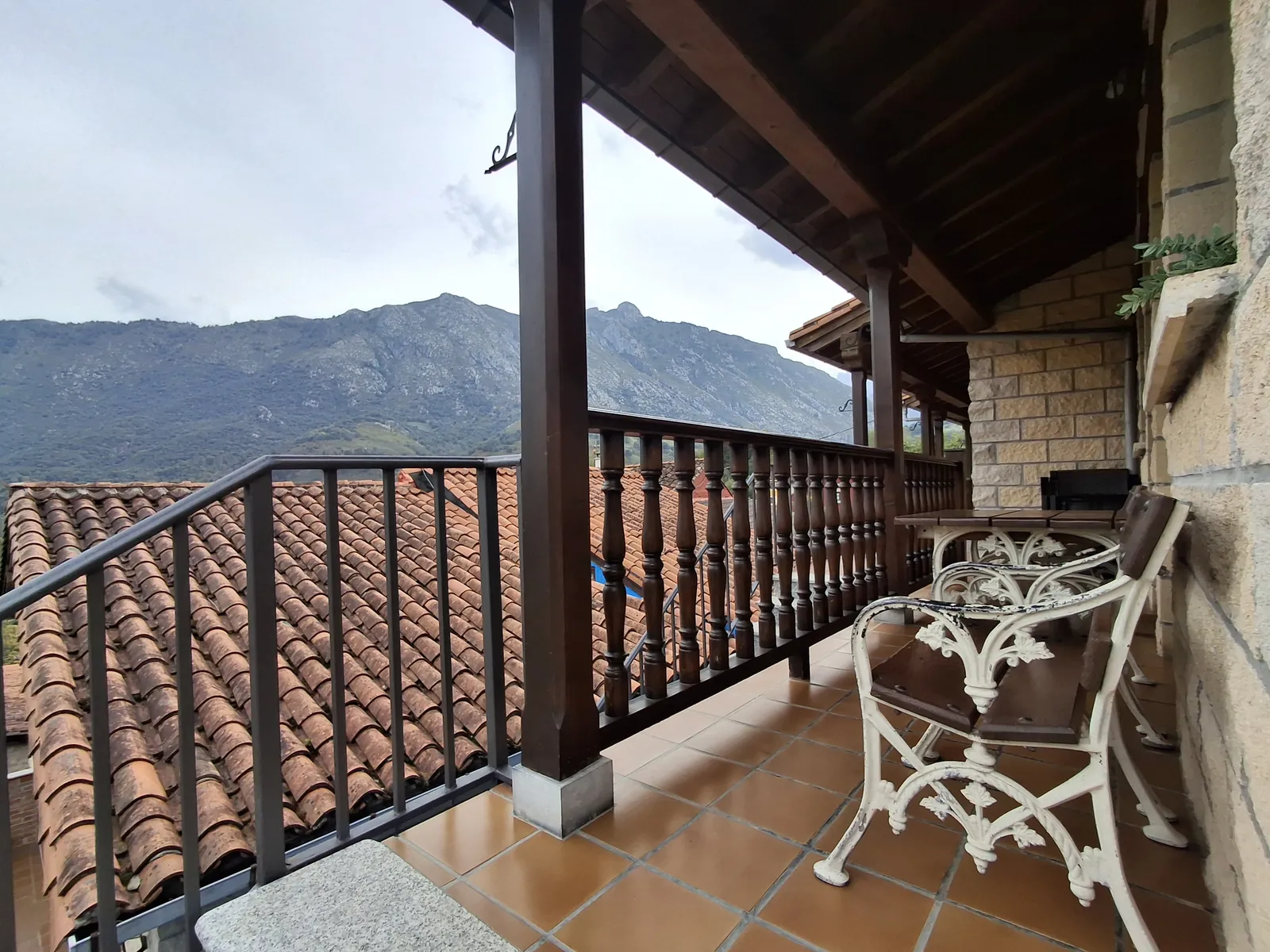
In Arenas de Cabrales and the surrounding area you will find it on practically every menu, and many restaurants offer their own version with Cabrales. From El Ardinal the centre of Arenas is a 9-minute walk away, so it is an easy plan for dinner without taking the car.
And if you want to keep exploring the area's cooking, here is Cantabrian fish and the rest of our food and drink page.
Sources: origin and varieties of cachopo (Turismo Asturias).