
In Asturias cider is not drunk, it is lived. It is the region's signature drink, and the ritual of serving it — escanciar, pouring it from height — is as much a part of the experience as the taste itself. So much so that Asturian cider culture has been recognised by UNESCO as Intangible Cultural Heritage of Humanity.
From apple to barrel
Asturian natural cider is made from apples alone, fermented with no added sugar or gas. And not just any apple: local cider varieties are used, very different from dessert apples, with names such as raxao, regona, xuanina, blanquina and verdialona. Every llagar, or cider house, works with its own blend, combining sharp, sweet and bitter apples until it finds the balance it is after.
The harvest comes in autumn. The apples are crushed into a pulp, pressed to extract the must, and this ferments in chestnut barrels or in tanks over the winter. By spring the cider is ready, and that moment has a celebration of its own: the espicha, when the barrel is opened and the cider is drunk straight from the stream, standing up and picking at food, in the cider house itself.
That agricultural origin explains the landscape across much of Asturias: the pomaradas, apple trees planted in meadowland, are still a recognisable feature of the Asturian countryside.
Why it is poured from height
Natural cider has no added gas, and its natural carbonation lies practically dormant in the bottle. Escanciar is the way to wake it up.
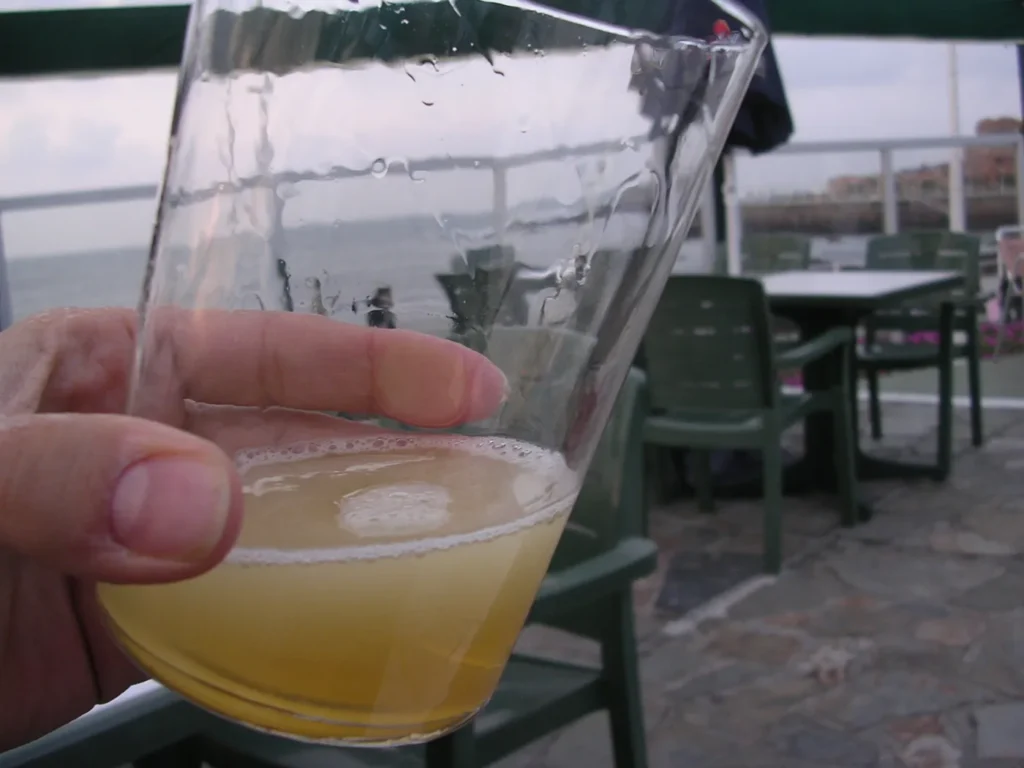
The person serving raises the bottle above their head and lets a thin stream fall into the glass, held low, tilted, at waist height. As it strikes the glass, the cider breaks up, aerates and forms a short-lived foam. That is the culín, and it is drunk in one go as soon as it is poured, because within seconds it loses its fizz and the harshness returns.
Only a small amount is served for exactly that reason: the culín is meant to be drunk whole and immediately. In a traditional cider house the glass is shared among everyone at the table and passed around: each person drinks their culín and hands the glass back.
A little is always left in the bottom, the culete, which is not drunk: it is thrown on the floor before passing the glass on, to rinse the rim you have just drunk from. That is why traditional cider houses have floors made for it, often covered in sawdust. It is not mess: it is part of how the place works.
How to order it without feeling lost
Nobody expects you to know how to escanciar. In any cider house they will serve it for you, and in many you will find automatic pourers that do the job with precision. If you fancy trying it yourself, count on spilling some on the floor: it is part of learning, and nobody will bat an eyelid.
It is ordered by the bottle, not by the glass, and the natural thing is to share bottles around the table. A couple of useful warnings for a first time: natural cider has a sharp, dry edge that can catch you out if you were expecting something sweet, and it goes down very easily, so it pays to take your time.
Alongside natural cider you will also find sparkling cider and what are known as new-expression ciders, filtered and more stable, served in a glass without pouring from height. They are a different product, just as Asturian, but the culín experience belongs to the natural kind.
What to drink it with
The acidity of cider cuts through fat, which is why it works so well with Asturian cooking. The most rounded local pairing is with Cabrales cheese: the power of the blue and the sharp edge of the cider balance each other out.
It is also a classic with tortilla, with chorizo cooked in cider, and with fish — hake in cider is a staple along the coast. And of course it goes perfectly well with a fabada or a cachopo, although there the limelight is shared.
Where to try it near Cabrales
There is no better place to discover it than a genuine cider house, taken calmly and without rushing: cider is enjoyed while chatting, bottle by bottle, and the conversation is as much part of the rite as the pouring.
In Arenas de Cabrales and the surrounding villages you have cider houses where you can try it in its own setting, and if you want to see the whole process, several llagares in central Asturias offer guided visits with a tasting. Opening times and visits vary a good deal with the season, so it is worth confirming them in advance.
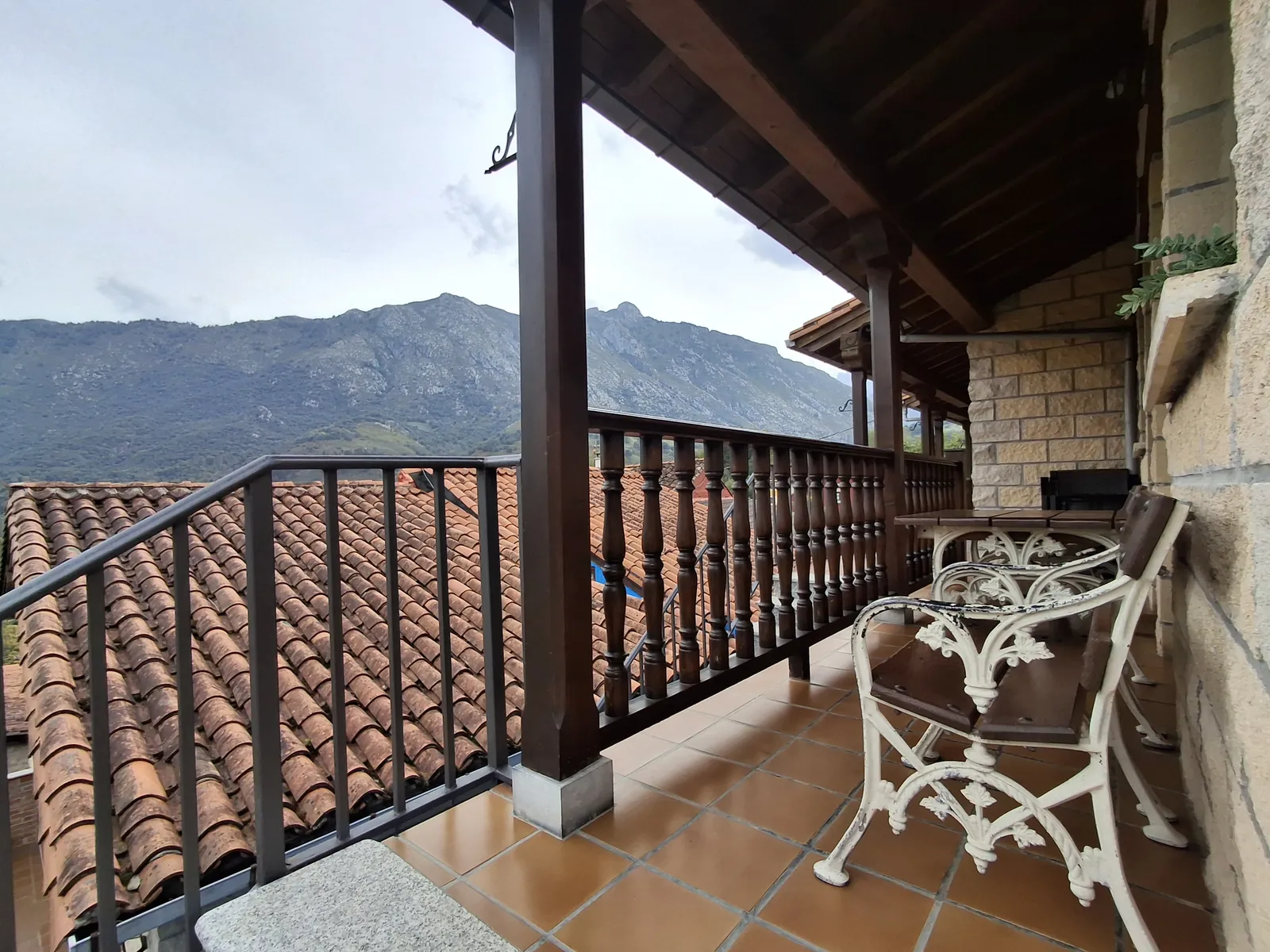
Staying at El Ardinal, in Arenas de Cabrales, you can try it without having to drive afterwards: many of the options are a short walk from the centre of Arenas.