
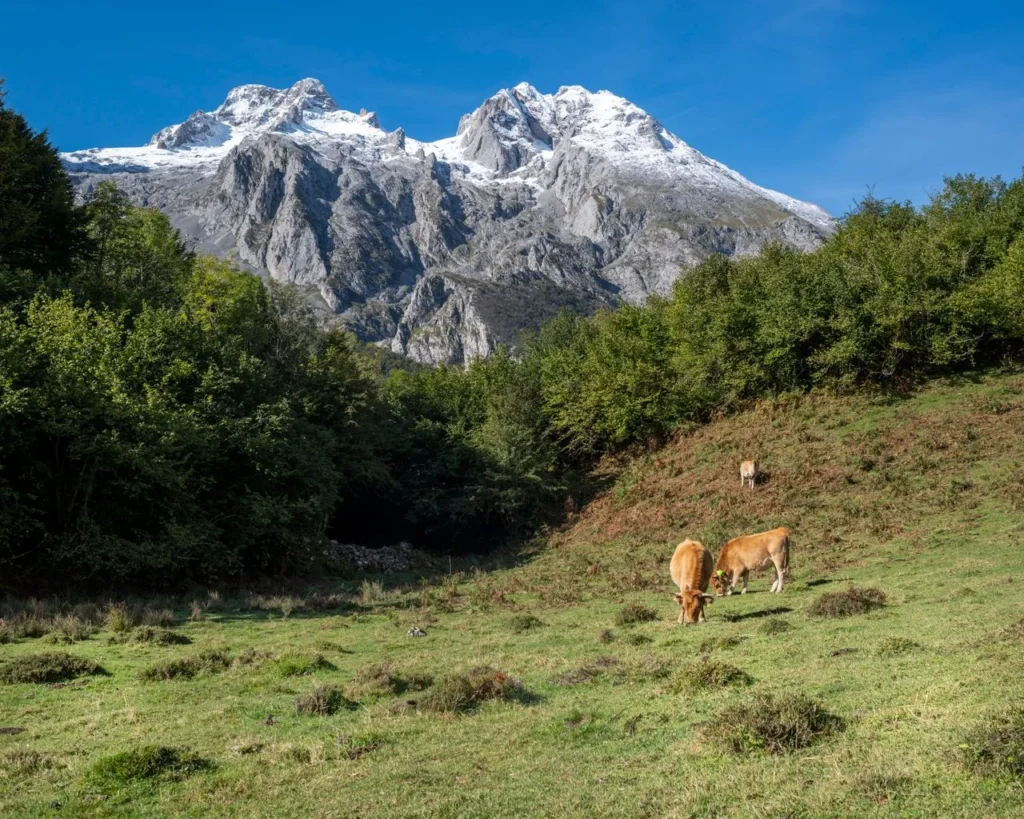
Some routes in Cabrales demand an early start, decent fitness and a healthy dose of respect. And then there are the Foces del Casaño: a level path beside the water, between woodland and rock walls, where all you need is a decent pair of shoes and the willingness to walk without hurrying.
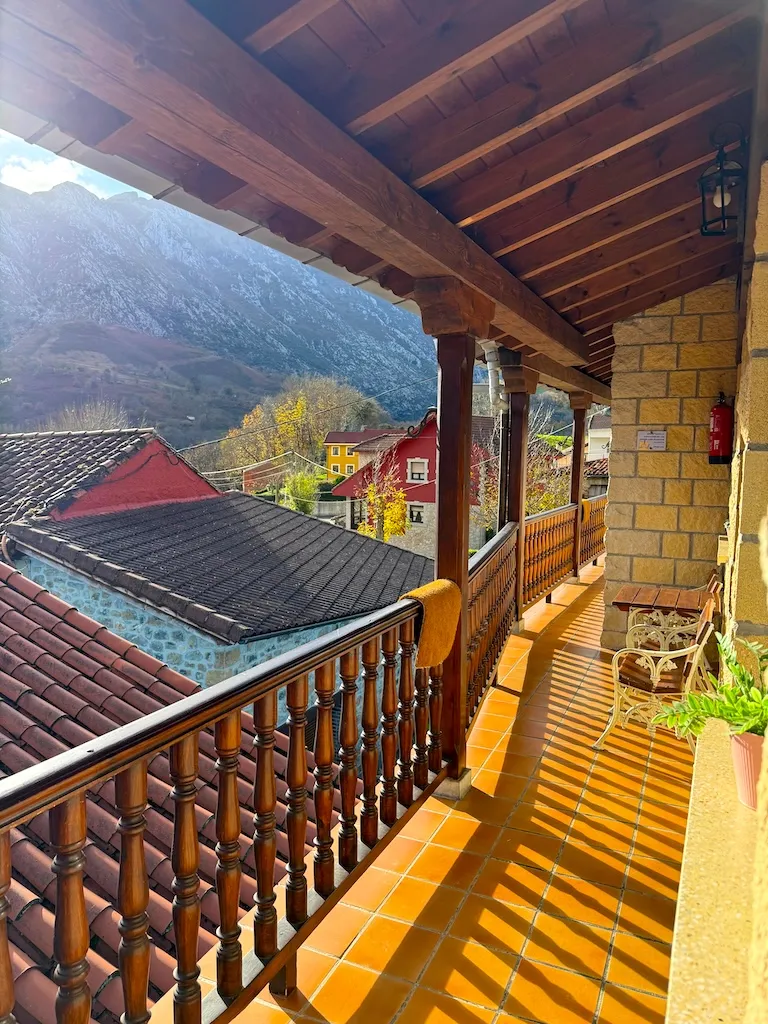
If you are staying at El Ardinal, it is about 15 minutes' drive away. And it is probably the best way to get to know a quieter Asturias without taking on a full day in the high mountains.
What the Foces del Casaño are
A foz is a gorge: the narrow cut a river has carved into limestone over millennia. The Casaño has done exactly that for several kilometres, leaving behind a canyon of vertical walls, still pools and small waterfalls.
The first thing you notice is the colour of the water. The Casaño runs clear almost all year, with the greens and blues you only get from mountain rivers over limestone. Its water is remarkably clear, and one look tells you why.
The second thing is the silence. Because the path runs along an enclosed valley, road noise disappears within five minutes. All that is left is the water.
The route, in numbers
These are the figures hiking guides generally give for the classic walk:
- Start: the village of La Molina, in the municipality of Cabrales.
- Distance: between 6 and 8 kilometres there and back, depending on how far you go.
- Ascent: minimal, around 175 metres cumulative.
- Time: 2 to 3 hours with stops, at an easy pace.
- Difficulty: low. Suitable for walking with children.
- Type: there and back along the same path. Turn around wherever you like.
An honest note on those numbers: published distances vary between roughly 6 and 8 kilometres because people turn back at different points. Some stop at the waterfall, others carry on to the Puente Mineros, and the keenest continue towards Vega Batuda in search of the river's source. Treat it as a walk to order: go as far as you feel like and retrace your steps.
What you will see along the way
The path starts among meadows and riverside woodland and narrows as the valley closes in. From there, the walk becomes a succession of small discoveries:
The stone bridges. Pompedro, Escobín and Mineros. Old crossings, built for the working life of these valleys long before anyone came here to take photographs.
The pools. The river forms clear, still stretches between the rocks. Some people swim in summer; it is worth saying that this water comes straight off the mountain and is genuinely cold.
The shepherds' huts. Stone buildings scattered across the meadows, evidence of the grazing that shaped this whole landscape.
The forest. Beech and oak cover much of the route, which makes it a very welcome choice on hot days: you walk in shade almost the whole way.
And with a little luck and a little quiet, wildlife: squirrels are common here and, with rather more fortune, you might spot an otter.
Why September is the best month
If you can choose when to come, this is the moment.
Temperatures drop into a far more comfortable range for walking, the August bustle fades, and the woods begin turning towards their first autumn tones. And since this is a route of shade and water, it gains enormously once the sun stops beating down.
If you happen to be here on 18 September, La Molina — the village where the walk begins — holds its festival of Nuestra Señora de la O. Worth knowing about, though you will find considerably less parking that day.
Before you go: what to know
Parking is very limited. We are talking about a handful of spaces beside the road or near the church in La Molina. In high season and at weekends, arriving early is not a tip: it is the difference between doing the walk and turning around.
Watch your footing when it is wet. Rocks and tree roots on the path become very slippery in damp conditions, even when the rest of the trail is dry. Shoes with a proper sole beat flat trainers.
There are narrow sections with a drop to the river. Nothing technical or exposed for an ordinary walker, but if you are travelling with small children or anyone who suffers from vertigo, it is worth knowing in advance.
Bring water and something to eat. There are no facilities along the route. And whatever goes in comes out: all rubbish goes back in your rucksack.
Getting there from El Ardinal
La Molina lies within Cabrales itself, a few minutes away by car. Access is from the AS-114, the road linking Cangas de Onís with Arenas de Cabrales, following the signposted turning to the village.
Since parking is so tight, our advice is simple: message us on WhatsApp before you set off. We will tell you how things stand on those days and what time it is worth getting going.
How to round off the day
This is where the walk really wins over a full mountain day: you finish around midday with plenty left in the tank.
The obvious move is to head into Arenas de Cabrales, wander the village and step into one of the dairies. After two hours walking beside the river, Cabrales cheese tastes different, and that is not a marketing line: it is what happens when hunger and place coincide.
A proper Asturian lunch, a cider without watching the clock, and back to the apartment. Shower, terrace, and time to decide tomorrow's plan at your own pace.
And if you want more
The Foces del Casaño work very well as a gentle day within a more ambitious stay. If you have days to spare:
- The Cares Route, the great gorge, for the day you want a real challenge.
- Bulnes and the Naranjo, the village with no road.
- The Lakes of Covadonga, with their summer access plan.
- Our pick of walks from Cabrales.
Our advice
Set aside a few hours for the Casaño. It is not the most famous route in the district, nor the one that appears on every list, and that is precisely why it keeps something others have lost: you can walk for a good while without meeting anyone.
A walk, good footwear, water and time ahead of you. Because here the plan is not to do a lot of things. It is to enjoy each one.