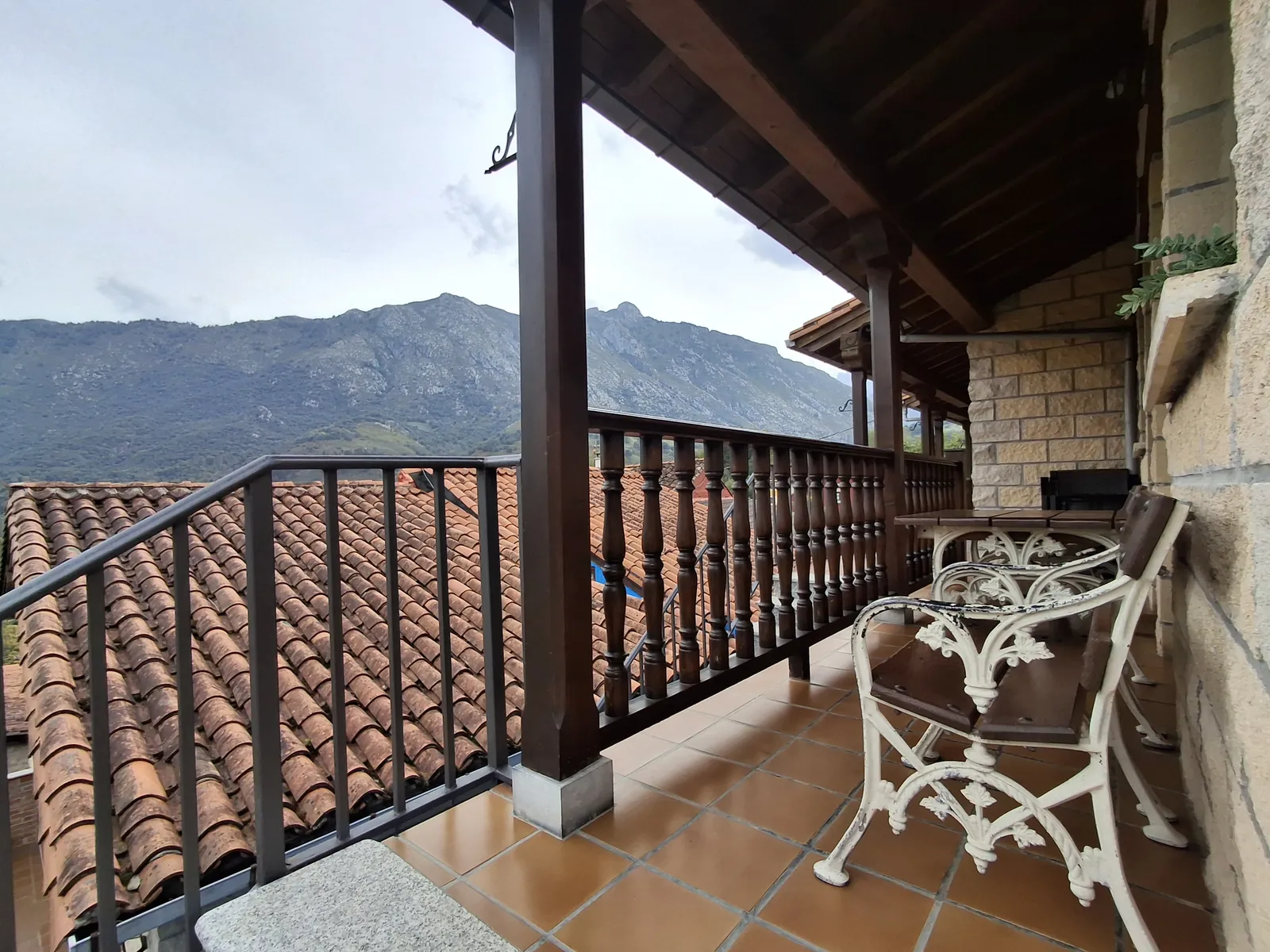

The Picos de Europa lean almost into the sea, and that is one of the oddities of this corner of Asturias: in about 40 minutes from Cabrales you go from high mountain to the shore of the Cantabrian. The capital of that coast is Llanes.
A fishing town with history
Llanes has an old quarter you can walk unhurried, with remains of the medieval wall, grand houses and palaces, and a fishing harbour still in use. It is a town that lives off the sea and off tourism without having entirely lost the scale of the first.
Its streets carry another very Asturian mark: that of the indianos, the emigrants who made their fortunes in the Americas and came back to build stately homes with a colonial air, palm trees in the garden as their signature. They are easy to spot and they are dotted all over the municipality.
In the harbour itself stands the work that gets photographed most: the Cubos de la Memoria, the concrete blocks of the breakwater painted by the Basque artist Agustín Ibarrola. A sea wall turned into a mural, and one of those things that works far better in person than in a photograph.
More than thirty beaches in a few kilometres
The municipality packs more than thirty beaches and coves into a relatively short stretch of coast, and they are very different from one another.
Toró, next to the town, is the most recognisable for the rock needles that emerge from the sand at low tide. Ballota and Andrín are open, spectacular expanses of sand. Torimbia, a perfect shell shape ringed by green, is a nudist beach and has to be reached on foot from the car park, which keeps it a little quieter. The Cuevas del Mar take their name from the arches and tunnels the sea has carved into the rock, exposed at low tide.
And then there is Gulpiyuri, the oddity: a sandy beach, with real waves, hidden inland among meadows and with no visible connection to the sea. The water reaches it through underground galleries carved into the limestone. It is tiny and very well known, so in the middle of August it pays to go first or last thing.
The bufones, the spectacle of the tide
If the limestone of the Picos is riddled with holes, so is that of the coast. At several points along the shoreline — above all on the Pría plateau — the sea forces its way through cracks and underground galleries and, when the pressure finds a way out, shoots upwards through an opening at the top of the cliff. That is a bufón, a blowhole.
With a heavy swell and a north wind, the jets of water and spray can top twenty metres, accompanied by a very distinctive roar. In calm seas, on the other hand, nothing happens at all: you see the hole and little else.
Here comes the important warning, and it is not rhetorical: the days when the bufones really perform are stormy days, the ground around them is slippery, and the openings sit unfenced in the middle of the cliff-top meadow. Keep your distance and stay away from the edge. This is a spectacle to watch from well back.
Between the mountains and the sea
This whole strip is protected as the Eastern Coast Protected Landscape, and it is best covered on foot: the Northern Way of the Camino de Santiago runs right through here, and much of it hugs the cliff, with the sierra behind and the sea below. You do not need to walk the whole Camino to make use of it; any single afternoon's stretch works.
Combining both landscapes in one day
It is one of the favourite plans among guests staying at El Ardinal: a morning in the mountains and an afternoon on the beach, or the other way round. Few parts of Spain allow that contrast with so little driving in between.
A practical note about the Cantabrian: the water is cold even in August, and the tide matters far more than visitors from the Mediterranean tend to expect. Beaches that are a vast expanse of sand at low tide almost disappear at high tide, so it is worth checking the tide table before deciding where to spend the afternoon.
Back at the table, the nearness of the sea shows in the Cantabrian fish; and if you are after another water plan, the Sella descent is a similar distance away.
Sources: Gulpiyuri Beach (Turismo Asturias), blowholes (Turismo Asturias), Coastal Way of St James (Turismo Asturias).